

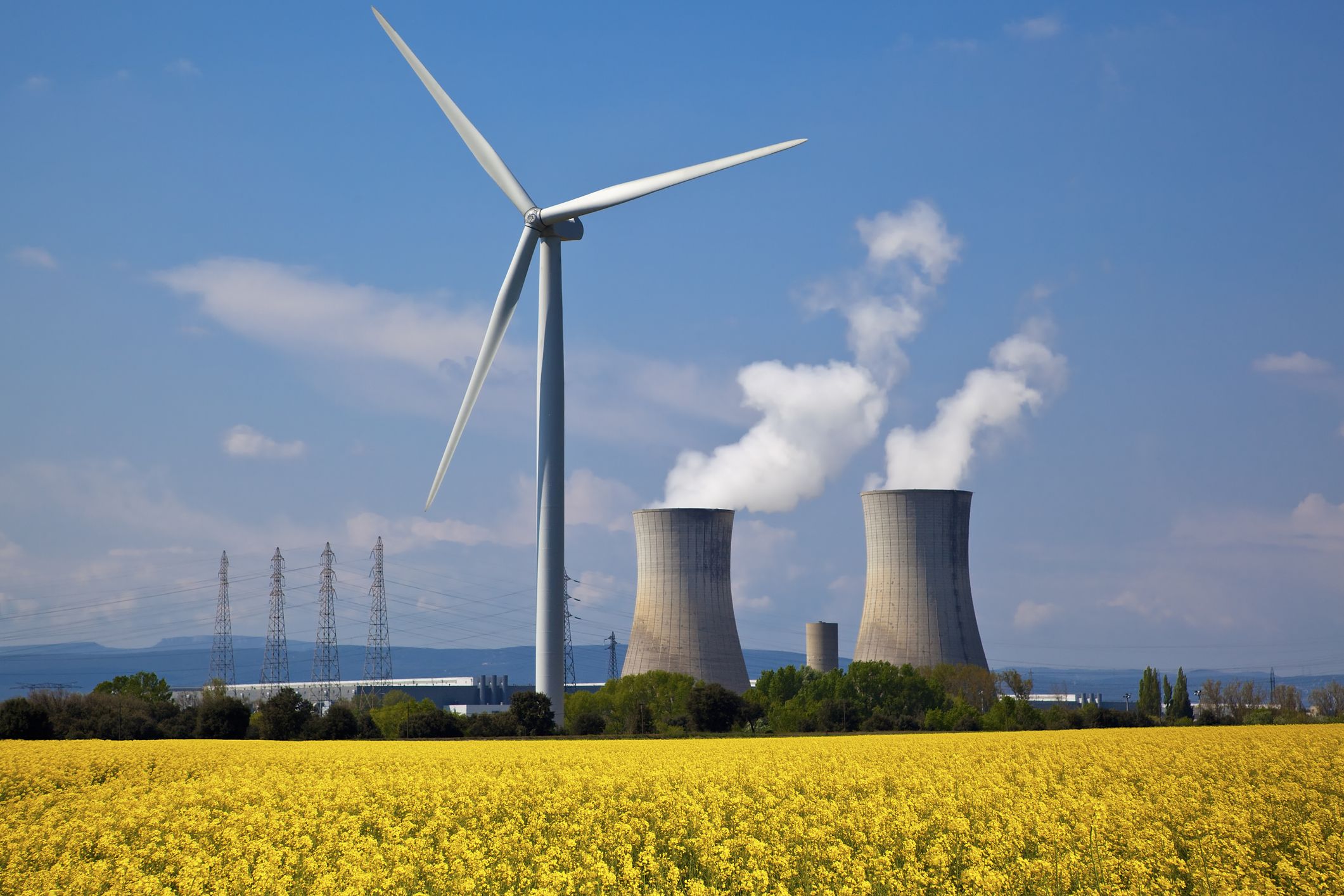

Africa's energy future faces a double challenge: powering economies while tackling climate change. Experts at Standard Bank's Climate Summit unpack financing pathways for a sustainable transition.
Across the continent, African countries face twin imperatives: to expand access to reliable, affordable energy for nearly 600 million people without electricity and to reduce emissions in line with global climate goals. For Standard Bank, this represents not just a challenge but an opportunity to help shape the continent's energy future.
This was the focus of the Energy Security and the Infrastructure Gap panel at the recent Standard Bank Climate Summit, where experts, investors, and government leaders convened to discuss what it will take to finance and deliver a just energy transition.
"Africa faces this dual challenge of an urgent need to power its growing economies and populations, while building a sustainable and climate-resilient future," said Stephen Barnes, Director and Regional Representative of UNEP African Office and Head of Corporate & Investment Banking, South Africa, Standard Bank. "At Standard Bank, we are deeply committed to driving Africa’s growth by financing and investing in infrastructure and energy in a way that supports access and security, but also balances the need to mitigate the impact of climate change."
A just transition, not a trade-off
The panel highlighted that energy security and decarbonisation are not mutually exclusive goals.
"It’s not a dichotomy; it’s not either or,” said Rudy Dicks, Head of the Project Management Office in the Presidency of South Africa. "We’ve been successfully seeing energy security, energy efficiency, cost competitiveness, and the ability to bring about a significant shift in how we produce energy through a just mechanism, as an integrated approach."
South Africa’s regulatory changes have facilitated the expansion of private-sector-led power generation. According to Dicks, 95% of the 22.5 gigawatts of new projects under these reforms are renewable, indicating clear market momentum.
Regional power, real impact
For Africa GreenCo, a renewable energy intermediary and trader, energy security requires a regional perspective. Group CEO Ana Hajduka shared how cross-border power trading helped Zambia avoid grid collapse during a recent drought.
"The only way to overcome that was through energy imports and cross-border integrated markets, such as the Southern African Power Pool," she said.
With Standard Bank's collaboration, GreenCo supplied 10% of Zambia’s total energy capacity over five months, stabilising the grid and safeguarding economic activity.


Hajduka also cautioned against repeating past mistakes in energy financing strategies, referencing the design of South Africa’s Renewable Energy Independent Power Producer Procurement Programme (REIPPPP).
"Adding more than $15 billion to South Africa’s national treasury to guarantee Eskom’s power purchase obligations was not a smart disbursement of funds. That was lazy," she stated.
Closing the infrastructure gap
Despite progress in renewable energy generation, infrastructure remains a critical challenge. In 2022, the African Development Bank noted a $100 billion annual shortfall in infrastructure financing in Africa.
South Africa alone requires 14 500 kilometres of new transmission lines over the next decade, costing R440 billion. However, as Sandile Peta, Energy Sector Lead at Infrastructure South Africa, pointed out, the country is currently constructing just 300 kilometres per year.
"Clearly, the large-scale integration of renewable energy, at the scale and pace required, needs significant and accelerated grid expansion," remarked Peta.
Financing Africa’s energy future
Private capital will play a leading role in Africa’s energy transition. Christopher Clark, co-founder of Inspired Evolution, framed this as solving an "energy dilemma," balancing security, equity, and sustainability, all made more achievable by advancing technology.
"Solar and wind are undoubtedly the most affordable forms of energy, both globally and on the continent,” he commented. “The intermittency issues are rapidly being addressed through technological advancements in battery energy storage systems."
Clark also highlighted the power of partnerships. "Our collaboration with Standard Bank is rooted in shared values. We intentionally seek out such partnerships because of aligned visions for sustainable development."
The Standard Bank commitment
Standard Bank is taking decisive steps to close Africa's infrastructure financing gap through structured solutions, innovative partnerships, and supportive policy implementation.
"We are committed to channelling more financing into infrastructure, particularly where regulations facilitate this," said Barnes.
The bank has pledged to mobilise R450 billion by 2028 to support green, social, and transition finance initiatives. This includes investing in renewable energy generation, storage systems, and grid infrastructure, as well as enabling cross-border power solutions.
The energy transition on the continent is not only about unlocking megawatts but also about driving economic growth, building climate resilience, and fostering a fair and inclusive future. With coordinated efforts from governments, financiers, and communities, Africa’s energy challenge could become one of its most significant opportunities.
Click HERE to watch the full panel discussion.

Join the drive towards a resilient future for African agriculture. Explore how innovative partnerships are shaping change.
Read more stories like this on Standard Bank’s Sustainable Impact hub below.
Sustainable Impact Season 2

Sustainable Impact Season 1


 Built with Shorthand