

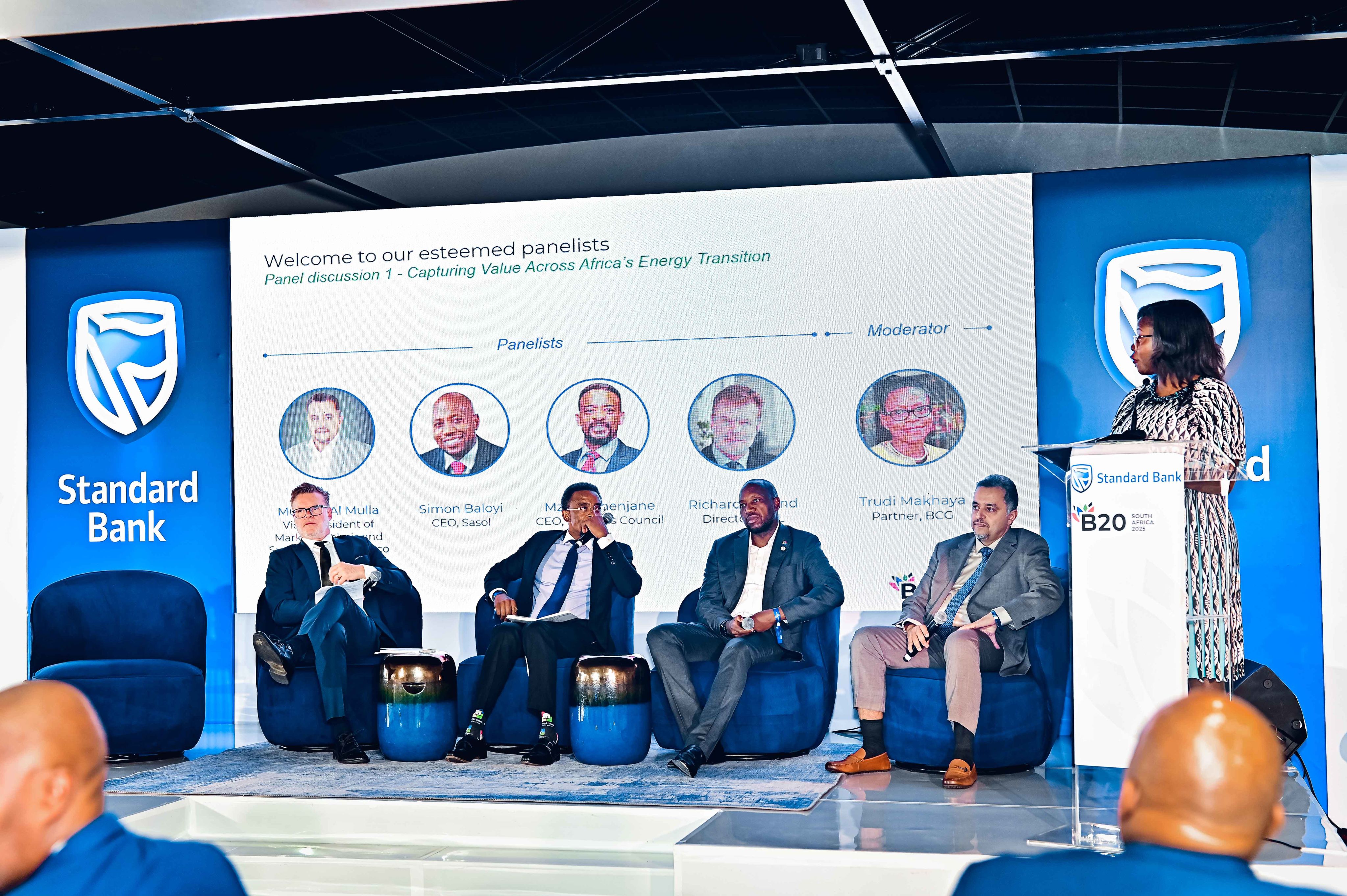

With more Africans without power than people living in the entire EU, the need for a more sustainable future is ever more pressing. Standard Bank has set a R450 billion target for renewable energy to drive the Just Energy Transition.
The private sector is helping to lead the Just Energy Transition across Africa. With almost 600 million people on the continent still without access to reliable electricity – more than the entire EU population – reliable energy is central to Africa’s development.
Standard Bank is now mobilising over R450 billion towards renewable energy by 2028, as Africa grapples with providing electricity access.
Speaking on the sidelines of the Business 20 (B20) South Africa 2025 Summit, Luvuyo Masinda, Chief Executive of Corporate and Investment Banking at Standard Bank, deliberated on this ambitious commitment during discussions on Africa’s Just Energy Transition (JET), and emphasised the delicate balance between economic growth and environmental responsibility.
"600 million people still do not have access to power across Africa. We need to find the right balance of providing energy to them and to the economies so that we can have economic growth," Masinda explained.
Standard Bank’s approach has evolved from supporting large government programmes to embracing decentralised energy projects involving corporations, SMEs, and households.
"We recognise the need to transition, given the negative impact that climate change has had on the most vulnerable communities across the continent," Masinda said, underlining the bank’s commitment to ensuring energy projects benefit both the environment and communities.

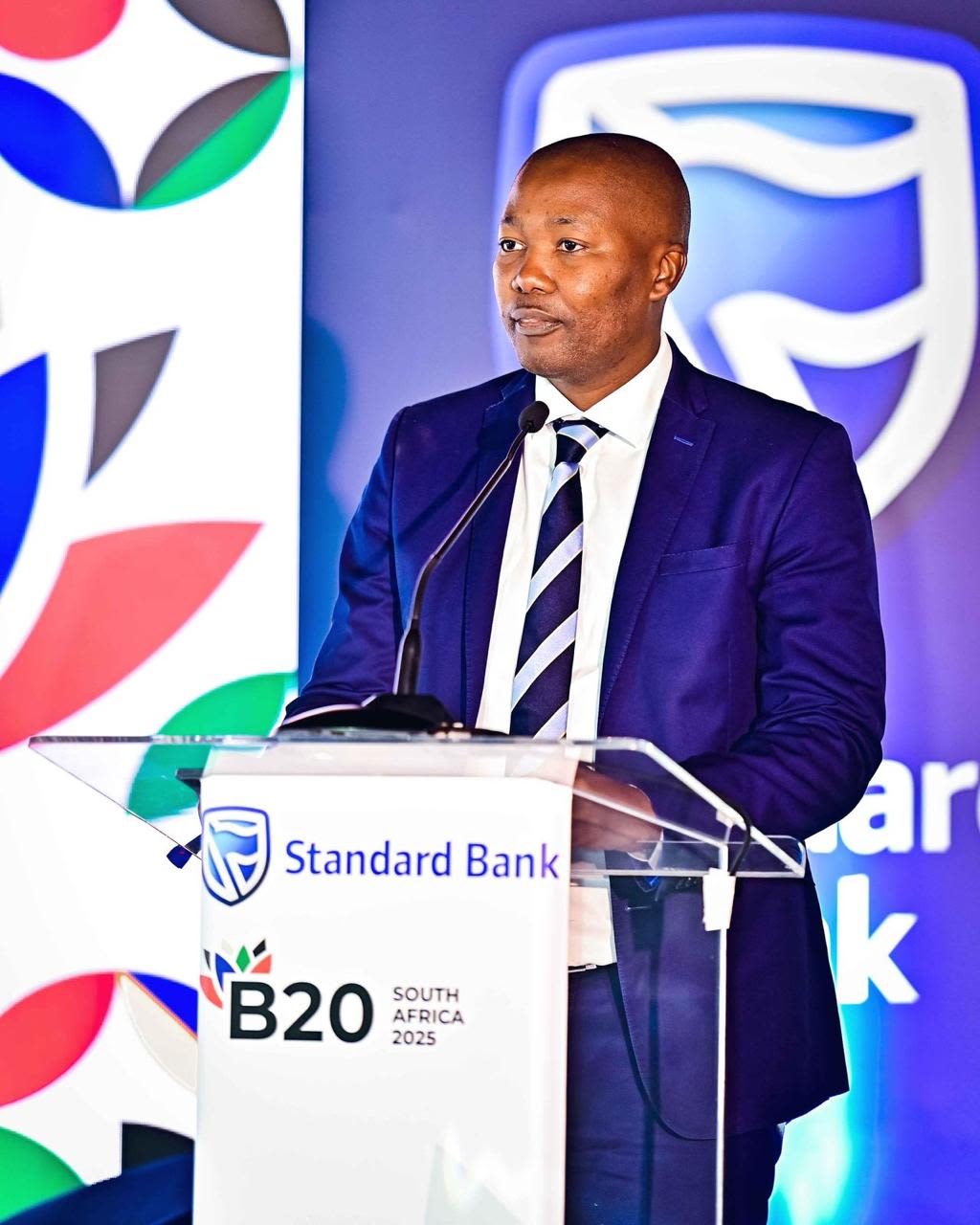
The bank’s strategy reflects lessons learned from South Africa’s renewable energy programme, which Masinda described as creating a "world-class" collaboration between the government, Eskom, the private sector, and funders to solve what seemed an "improbable problem".
Standard Bank’s focus extends beyond mere energy access to climate adaptation, recognising that developing economies bear disproportionate losses from climate-related disasters. The bank is advocating for retraining programmes for workers transitioning from coal-based industries, ensuring no communities are left behind.
When it comes to climate risk, the need to accelerate our adaptation has become especially important. “Part of this should be about growing economies and giving people the ability to access jobs or to start businesses, because we believe that where people can invest and protect themselves, they stand a better chance against climate change,” he said.
Multilaterals, such as the G20 and COP30, play a critical role in shaping policy alignment and ensuring no part of the world gets left behind. "Where you have alignment around a big global problem, there is a better chance of succeeding. Eventually, we hope to win this challenge of climate adaptation," Masinda added.
Coinciding with South Africa’s G20 presidency and preparations for COP30, Masinda sees these platforms as opportunities to build consensus around pragmatic climate solutions that recognise different starting points for various countries and regions.
"Different voices are helping to shape what hopefully we’ll all come up with: something that’s much more pragmatic, that recognises that each country and each region is starting from a different place."

Click HERE to learn more about Standard Bank’s solutions and how they can support your business or personal journey towards a sustainable future
Read more stories like this on Standard Bank’s Sustainable Impact hub below.
Sustainable Impact Season 2

Sustainable Impact Season 1


 Built with Shorthand